CBT for Anxiety
Are you looking for experienced and licensed psychologists and CBT therapists to help you with Anxiety? We provide evidence-based CBT and ACT to help you live with anxiety.
Anxiety is a natural human response to uncertainty, perceived threat, or important life demands. It involves changes in both the mind and body. For some, anxiety shows up as persistent “what if…” thinking, a need to feel “just right,” intrusive memories, or distressing obsessional thoughts that feel difficult to disengage from. For others, anxiety is experienced more physically, muscle tension, rapid heartbeat, shallow breathing, digestive changes, sleep disruption, or restlessness.
Anxiety is not a flaw. It is a built-in alarm system designed to protect us. In reasonable amounts, it can sharpen focus, enhance performance, and motivate preparation. It becomes problematic when it grows rigid, excessive, or begins to dictate how we live.
When anxiety starts to narrow your life
When anxiety feels overwhelming, it is natural to want relief. Many people begin avoiding situations that trigger anxiety or engage in behaviors (including mental rituals) intended to reduce distress. While these strategies may provide short-term relief, they often reinforce fear over time.
Avoidance and ritualizing teach the brain that anxiety signals danger. Confidence shrinks. Life becomes organized around staying safe rather than living fully. Over time, this cycle can make life smaller, more restricted, and less meaningful, sometimes accompanied by discouragement or depression.
This cycle is not about weakness or lack of willpower. It reflects how the human nervous system learns. The good news is that it can also learn new patterns.
Evidence-based treatment: CBT and ACT
Cognitive Behavioral Therapy (CBT) and Acceptance and Commitment Therapy (ACT) are both scientifically supported treatments for anxiety and related conditions.
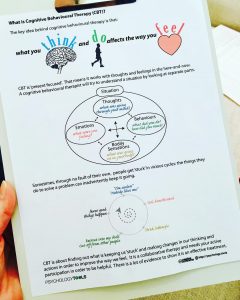
CBT helps you identify and shift unhelpful patterns of thinking and behavior that maintain anxiety. ACT expands this work by helping you build psychological flexibility — the ability to experience uncomfortable thoughts and feelings without being dominated by them, while choosing actions aligned with your values.
Rather than trying to eliminate anxiety completely, a more effective approach is to:
-
Respond differently to anxious thoughts
-
Reduce avoidance and compulsive patterns
-
Increase willingness to experience discomfort in service of what matters
-
Take meaningful, values-based action even in the presence of uncertainty
This approach applies to diagnosed anxiety disorders (e.g., generalized anxiety disorder, panic disorder, social anxiety disorder, specific phobia, obsessive-compulsive disorder, post-traumatic stress disorder) as well as anxiety that may not meet diagnostic criteria but still interferes with work, relationships, sleep, parenting, or health.
Treatment is structured, collaborative, and active. Change does not happen only in the therapy room. You will practice skills between sessions, gradually retraining your nervous system and building confidence through real-world experience. Research consistently shows that active participation in CBT and ACT leads to durable reductions in anxiety, avoidance, compulsive behavior, and depressive symptoms, along with improvements in overall quality of life.
Our network of contracted independent psychologists and CBT therapists have advanced training in evidence-based anxiety treatment.
What about medication?
Some individuals are prescribed medications such as benzodiazepines or antidepressants to help manage anxiety symptoms. Medication can provide meaningful relief, particularly in the short term.
However, long-term change typically requires learning new ways of responding to anxious thoughts, feelings, and physical sensations. Without these skills, anxiety often returns when medication is reduced or discontinued.
Research indicates that CBT and ACT — whether used alone or in combination with medication — tend to produce more lasting benefits than medication alone. If you choose to use medication, we collaborate with your prescribing physician (with your permission) to ensure coordinated, thoughtful care.
What are realistic goals for therapy?
Our aim is not to eliminate uncertainty or promise a life without anxiety. That is neither realistic nor necessary. Our aim is to help you build resilience, flexibility, and the capacity to move toward a full and meaningful life, even when anxiety shows up.