Cognitive Behavioral Therapy
What is CBT and ACT?
Are you looking for experienced and licensed psychologists and CBT therapists? We provide evidence-based CBT and ACT to help you live with anxiety. Cognitive Behavioral Therapy (CBT) and Acceptance and Commitment Therapy (ACT) are evidence-based psychological treatments shown to be effective for anxiety, depression, OCD, insomnia, trauma-related concerns, health anxiety, and stress.
CBT and ACT are active, skill-based therapies grounded in decades of scientific research. Rather than simply talking about problems, practical tools are introduced to help you respond differently to thoughts, emotions, and behaviors that keep you stuck.
How CBT works
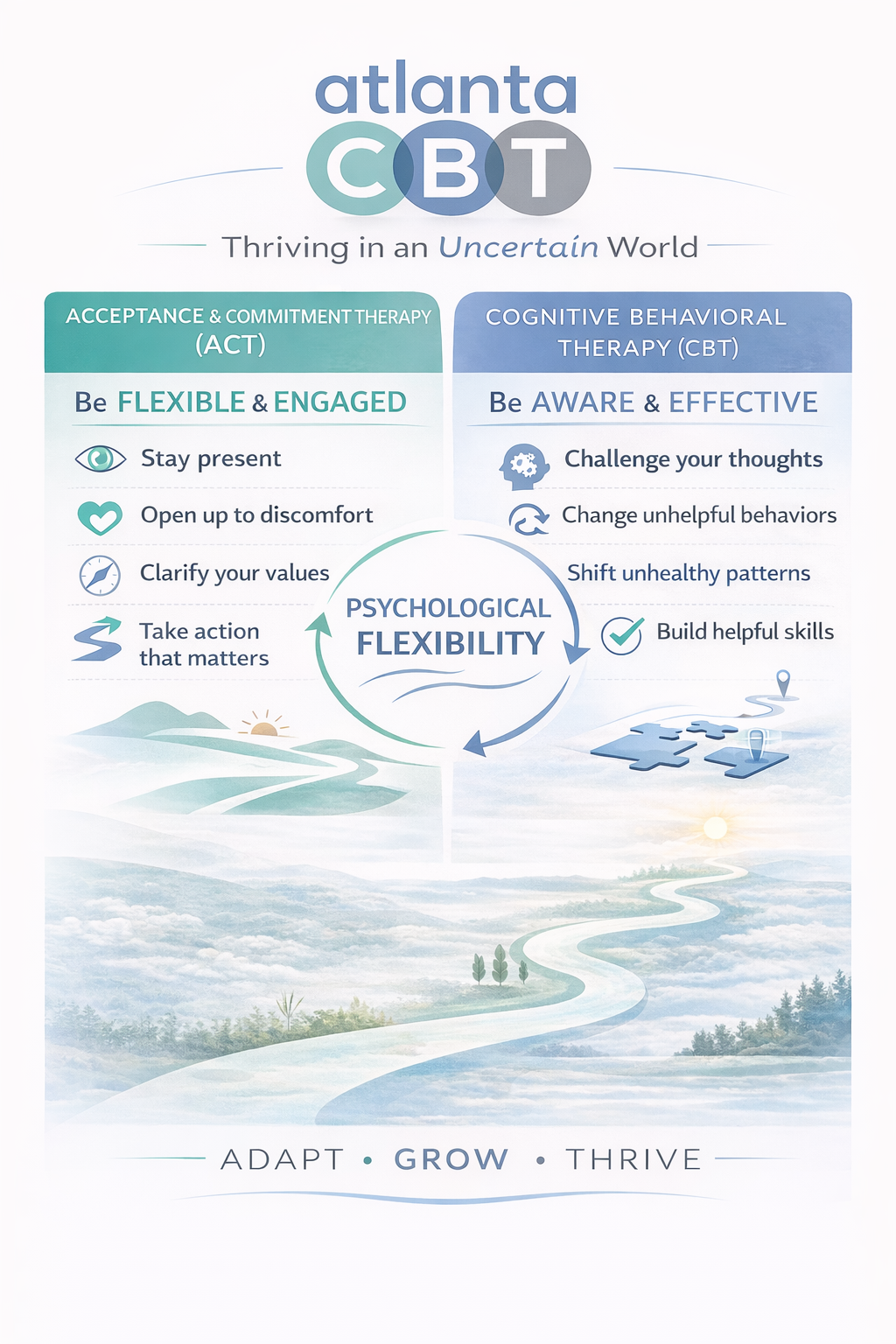
CBT focuses on the connection between thoughts, emotions, and behaviors. When one part of this cycle shifts, the others change as well. Treatment may include learning to:
-
Identify and step back from unhelpful thinking patterns
-
Reduce avoidance behaviors that maintain anxiety
-
Build healthier routines around sleep, health, and daily functioning
-
Practice new skills between sessions
CBT is structured, goal-oriented, and collaborative. Most treatment is time-limited and focused on measurable progress.
How ACT strengthens the work
Acceptance and Commitment Therapy (ACT) builds psychological flexibility, the ability to stay present, open, and engaged even when life feels uncertain.
Rather than trying to eliminate difficult thoughts or emotions, ACT helps you:
-
Develop mindful awareness (paying attention on purpose, without judgment)
-
Make space for discomfort instead of fighting it
-
Clarify your personal values
-
Take meaningful action even when anxiety or doubt is present
Together, CBT and ACT allow us to intervene at multiple points in the thought–emotion–behavior cycle while strengthening resilience in a world that cannot promise certainty.
Therapy within Atlanta CBT’s network of psychologists and CBT therapists is collaborative, confidential. Clinical decisions are guided by research and professional judgment, not productivity quotas or insurance constraints.
For more information about evidence-based behavioral therapies, visit the Association for Behavioral and Cognitive Therapies.
Read more about CBT specifically for:
-
Anxiety (social anxiety, generalized anxiety, panic, phobias, health anxiety)
-
Obsessive-compulsive disorder (OCD) and related disorders, including PANS/PANDAS
- Body-focused repetitive disorders (nail biting, hair pulling, skin picking)
-
Substance use and non-judgmental support around changing drinking or drug use
- Attention Deficit Hyperactivity Disorder (ADHD)